
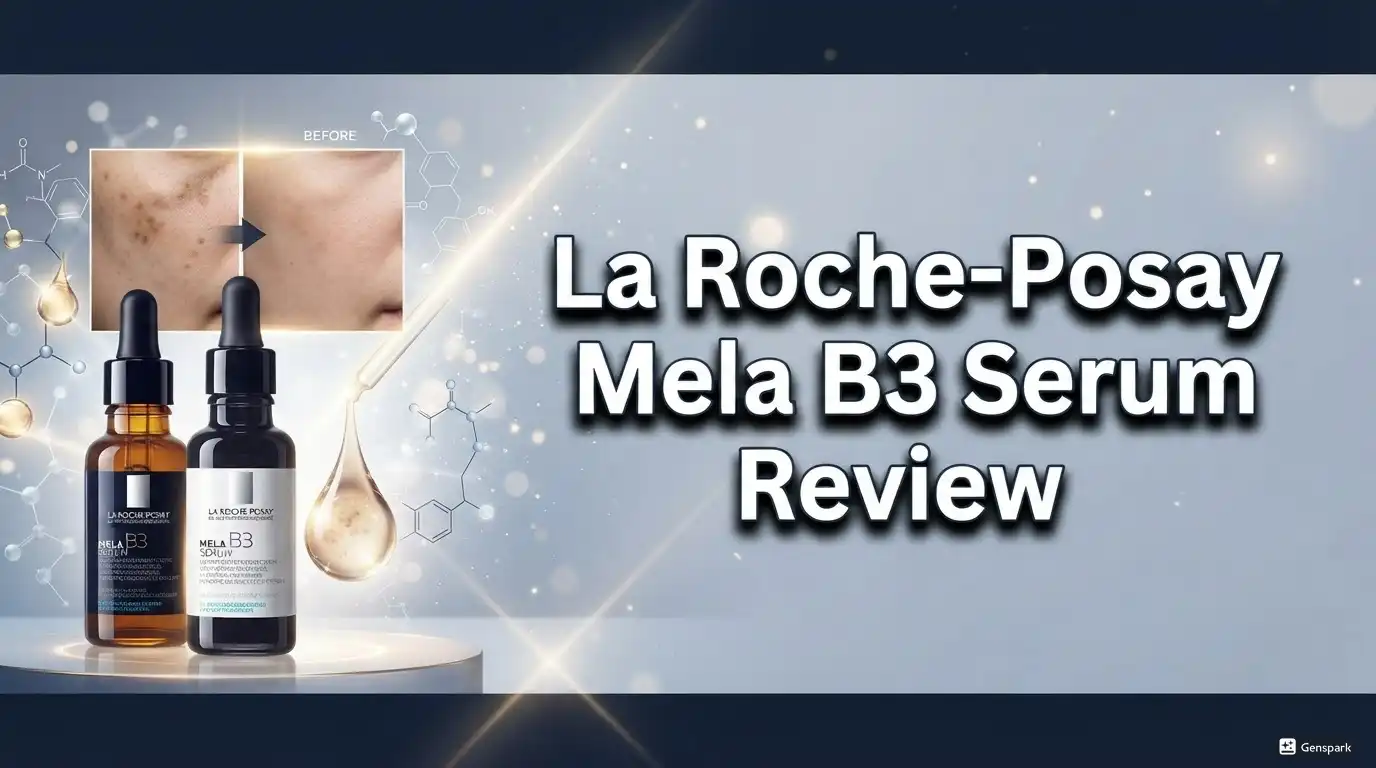
La Roche-Posay Mela B3 Serum Review 2026: Complete Guide
Dark spots have a way of showing up at the worst times. You wake up, look in the mirror, and there it is. A patch of pigment that was not there last summer. If this sounds familiar, you have probably seen the La Roche-Posay Mela B3 Serum all over your feed. It launched with big claims. It promised results on dark spots, age spots, and post acne marks for all skin tones. The hype is loud, but hype does not fade pigment. Research does.
In this review, I break down the science, the real user results, the price, and the complaints. I also share what happened when people used it for eight weeks or longer. By the end, you will know if this serum deserves a spot in your routine or if your money works harder elsewhere.
Key Takeaways
- The Mela B3 Serum combines a new patented molecule called Melasyl with 10% niacinamide. Melasyl came from 18 years of La Roche-Posay research. It works by trapping excess melanin before it builds up in the skin.
- Clinical data looks strong. In a company study, 90% of participants showed a reduction in the look of dark spots after eight weeks. A separate claim reports 85% saw a drop in persistent dark spots, with results confirmed across all skin tones.
- The texture earns praise. It feels light, absorbs fast, and layers well under sunscreen and makeup. Many users with sensitive skin report no stinging.
- It targets a wide range of discoloration. That includes sunspots, age spots, post acne marks, and general uneven tone.
- Patience is part of the deal. Most users see early changes in two weeks. Real fading usually takes six to twelve weeks of daily use.
- The main downsides are price and pace. At around $44.99 for one ounce, it costs more than many alternatives. A small group of users reports breakouts on sensitive skin. The full picture of each point appears in the sections that follow.
What Is the La Roche-Posay Mela B3 Serum?

- Targeted Dark Spot Remover for Face: Serum for face that targets a spectrum of skin discoloration, visibly reducing sun spots, age spots, and post-acne marks or...
- Promotes Radiant & Even Skin Tone: This dark spot corrector for face visibly corrects even stubborn dark spots, with long-lasting results, revealing brighter...
- Breakthrough Patented Ingredient Complex: Formulated with new, multi-patented Melasyl and a potent 10% Niacinamide (Vitamnin B3) this ingredient blend...

Last update on 2026-09-16 / Affiliate links / Images from Amazon Product Advertising API
The Mela B3 Serum is an anti aging dark spot serum from La Roche-Posay, a French pharmacy brand owned by L’Oréal. The brand built its name on products for sensitive skin. This serum extends that mission into pigmentation care. It launched as a new over the counter option for discoloration, and it arrived with rare fanfare for a drugstore priced product.
The formula centers on two active ingredients. The first is Melasyl, a multi patented molecule that La Roche-Posay calls a melanin trapper. The second is 10% niacinamide, one of the most studied brightening ingredients in skincare. The company positions the serum as a treatment for the full range of discoloration. That list includes sunspots, age spots, post acne marks, and post inflammatory hyperpigmentation.
The serum comes in a one ounce pump bottle. The pump matters because it protects the formula from light and air. The liquid has a soft, milky feel that suits daily use on all skin types, including sensitive skin. Dermatologists featured in the launch press noted that the serum filled a gap. Few accessible products addressed dark spots across all skin tones with published testing. The Mela B3 Serum set out to close that gap, and the next section explains how it works.
The Science Behind Melasyl and Niacinamide
Understanding this serum starts with melanin. Melanin is the pigment that gives skin its color. Sun damage, hormones, and inflammation can push pigment cells into overdrive. The result is a dark spot. Most brightening products try to slow melanin production. Melasyl takes a different path. According to La Roche-Posay, it works as a melanin trapper, which means it captures excess melanin intermediates before they deposit into skin cells. The company spent 18 years developing the molecule, and it holds multiple patents.
The second active is niacinamide, also called vitamin B3. The serum carries it at a strong 10% concentration. Niacinamide blocks the transfer of pigment to skin cells. It also calms redness, supports the skin barrier, and softens fine lines. One ingredient traps pigment while the other blocks its transport. Together they attack discoloration from two directions, which explains the dual action design.
It is worth noting some honest debate. Users on skincare forums point out that niacinamide does much of the heavy lifting in the formula. A 10% niacinamide serum costs far less than this one. The counterargument is that Melasyl offers a novel mechanism those cheaper products lack. Both views have merit. The blend targets pigment through several pathways at once, and that broad approach suits stubborn spots that resisted single ingredient products.
How To Use the Mela B3 Serum for Best Results
Consistency decides your outcome with this serum. La Roche-Posay recommends applying it every morning and evening on clean, dry skin. Use two to three drops for the whole face. Gently pat it over areas of discoloration first, then spread the rest across your face. Let it absorb for a minute before your next product.
The order of your routine matters. Apply the serum after cleansing and before moisturizer. Follow with sunscreen every morning. Sunscreen is not optional. UV exposure drives new pigment, so a serum without daily SPF works against itself. Choose broad spectrum SPF 30 or higher.
You can layer this serum with most actives. It plays well with retinol, vitamin C, and exfoliating acids, though sensitive skin may want to split actives between morning and night. Avoid stacking it with strong acids in the same session if your skin runs reactive. Patch test for two days on your inner arm if you have a history of sensitivity.
Set realistic milestones for progress. Expect early brightness around week two. Visible fading of spots usually appears between weeks six and eight. Deeper or older marks can take three months. Take a photo in the same light every two weeks. The change comes on slowly, and photos catch what your eyes miss day to day.
Top 3 Alternative for La Roche-Posay Mela B3 Serum
The Mela B3 Serum works, but it is not the only path to clearer skin. Some readers want a lower price. Others want a formula with a longer track record. These three verified alternatives cover those needs. Each one targets dark spots with proven ingredients, and each holds strong ratings from thousands of buyers.
First up, The Ordinary Alpha Arbutin 2% + HA. This serum costs a fraction of the Mela B3 Serum. Alpha arbutin gently slows pigment production, and hyaluronic acid keeps the formula hydrating. It suits beginners and sensitive skin types.

- BRIGHTENS & TARGETS UNEVEN SKIN TONE: Alpha Arbutin 2% + HA brightens skin and reduces the appearance of dark spots, promoting a more even complexion.
- HIGH-STRENGTH FORMULA: Contains 2% purified Alpha Arbutin, a well-known skin-brightening ingredient, combined with hyaluronic acid for enhanced hydration
- BOOSTS RADIANCE & HYDRATION: Improves skin radiance and provides instant and long-term hydration, leaving skin looking brighter and more hydrated.
Last update on 2026-09-16 / Affiliate links / Images from Amazon Product Advertising API
Second, Paula’s Choice CLINICAL Discoloration Repair Serum. This one uses tranexamic acid, an ingredient dermatologists often recommend for stubborn marks and post acne spots. The fragrance free formula fits normal to dry skin.

- VISIBLY FADE DARK SPOTS: Take on stubborn brown & gray patches & post-acne discoloration with clinical-strength brighteners that disrupt the causes of unwanted...
- CUTTING-EDGE INGREDIENTS: 3% tranexamic acid, 5% niacinamide & 0.5% bakuchiol work together with pure tocopherol (vitamin E) & milk thistle to target & steadily...
- IMPROVE MASK-LIKE DISCOLORATION: This non-irritating treatment promotes an even skin tone while brightening & fading the look of stubborn, diffuse...
Last update on 2026-09-16 / Affiliate links / Images from Amazon Product Advertising API
Third, The Inkey List Discoloration Correcting Serum. This budget tranexamic acid option holds more than 16,000 ratings. It brightens dark spots and post acne marks at a price that lets you test pigmentation care with little risk.

- FADE THE LOOK OF DARK SPOTS: Discoloration correcting serum that visibly improves the appearance of dark spots and surface discoloration for a more even-looking...
- TRANEXAMIC ACID + NIACINAMIDE: Cetyl tranexamate mesylate, a stabilized tranexamic acid derivative, works with niacinamide to visibly even the look of skin...
- VISIBLY EVEN TONE: Helps dark spots look lighter and skin tone appear more even with continued use.
Last update on 2026-09-16 / Affiliate links / Images from Amazon Product Advertising API
Clinical Results and a Realistic Timeline
Every serum makes claims. Few publish numbers. La Roche-Posay ran consumer studies on the Mela B3 Serum and shared the results. After eight weeks, 90% of participants showed a reduction in the look of dark spots. The brand also cites an 85% reduction in the appearance of persistent dark spots, and it states the formula is proven on all skin tones. That last point matters, because most pigmentation research historically centered on lighter skin.
The company describes the results as progressive. Week two brought improvement in overall tone for many users. Week four brought visible fading of post acne marks. Week eight delivered the strongest numbers on stubborn spots. A dermatologist quoted in the launch coverage said the serum targets facial discoloration, dark spots, and uneven tone in one step.
Independent voices add useful context. A Marie Claire editor reported lighter dark spots with consistent use over several months. She also noted her skin grew more reactive in winter. Reddit users in pigmentation communities report brighter tone, though some credit the niacinamide dose as the main driver. The honest read is this. The clinical data supports the claims, the results move at a slow and steady pace, and individual results vary with skin type and spot depth. Treat eight weeks as the true test, not day eight.
What Real Users Say in 2026
User reviews tell you what clinical studies skip. The Mela B3 Serum holds a 4.3 star rating across roughly 15,500 ratings on Amazon, which places it in strong company for a premium serum. The pattern across reviews stays consistent. Praise centers on texture, gentleness, and gradual fading.
Positive reviews follow a familiar script. One shopper with dark marks near her mouth reported clear fading after a month. A reviewer in her seventies noted visible lightening of brown spots on very light skin. Several users call it the first serum that faded post acne marks without irritation. Many mention the milky texture absorbs fast and wears well under makeup.
Critical reviews deserve equal space. A small group reports breakouts on sensitive skin, often in the first weeks. Some users on forums describe minor purging on the chin. Others say the price feels high for a niacinamide heavy formula. A few note the smell, which most enjoy but a minority dislike. One common thread in lukewarm reviews is impatience. Buyers who judged the serum at two weeks felt let down. Buyers who lasted eight weeks or longer report the highest satisfaction. The lesson from 2026 reviews is simple. This serum rewards steady use and punishes quick judgment.
Pros and Cons
Every product has trade offs. Here they are in plain view.
Pros:
- Combines patented Melasyl with a strong 10% niacinamide dose
- Clinically supported, with 90% of study participants showing dark spot reduction at eight weeks
- Proven effective across all skin tones
- Light, milky texture that absorbs fast with no sticky residue
- Gentle enough for sensitive skin and daily use
- Fragrance considerations are minimal and the pump bottle protects the formula
- Layers well under sunscreen, makeup, and other actives
Cons:
- Costs around $44.99 for one ounce, which stings next to $12 alternatives
- Results move slowly, and stubborn spots can need three months or more
- A minority of sensitive skin users report breakouts or purging
- Some users attribute most of the benefit to niacinamide rather than Melasyl
- Requires strict daily sunscreen use to hold results
- The scent divides opinion among long term users
Price, Size, and Where To Buy
The Mela B3 Serum lists at $44.99 for a one ounce (30 ml) bottle on the official La Roche-Posay site. Major retailers keep that price. Target, Dermstore, LovelySkin, and Ulta Beauty stock it at the same level. Amazon carries it with frequent coupons, and third party listings sometimes price it higher, so check the seller before you buy.
Cost per use softens the sticker shock. A one ounce bottle with two to three drops per application lasts about two months with twice daily use. That works out to roughly 75 cents a day. A cheaper serum used twice as long with weaker results costs more in the end. Value depends on outcome, not sticker price.
La Roche-Posay runs two offers worth knowing. First, the brand offers free samples of the Mela B3 Serum through its website, which lets you test the texture before you commit. Second, sales events like Prime Day and the November holiday season often bring the Amazon price down 15% or more. Watch the listing with the verified seller and the largest review count. Buy from marketplaces with weak seller histories at your own risk, because counterfeit skincare exists on every platform. For a 2026 purchase, the safest routes are the brand site, Amazon’s primary listing, or a major drugstore retailer.
Who Should Use This Serum and Who Should Skip It
The right product choice starts with an honest match test. This serum fits a specific set of needs, and knowing them saves you money and frustration.
You are a strong candidate if you fit one of these profiles. You fight post acne marks that linger for months. You deal with early sunspots or age spots from sun exposure. You want one serum for overall uneven tone. You have sensitive skin that reacts to strong acids or retinol. You want a pigmentation product tested on all skin tones, including deeper tones where hyperpigmentation runs stubborn. You prefer gentle daily care over aggressive treatments.
You should look elsewhere in a few cases. If your only concern is widespread melasma, a dermatologist guided plan with prescription actives will likely outperform any over the counter serum. If you want fast results before an event in three weeks, no serum delivers that. If your budget is tight, a 10% niacinamide serum or an alpha arbutin product delivers a large share of the benefit at a third of the price. If you dislike slow burn routines and abandon products after two weeks, you will waste your money here.
The serum also suits a specific life stage well. Reviewers in their thirties through seventies report the widest satisfaction. Younger users with active acne should treat the marks first, then fade them.
Side Effects and Safety
The Mela B3 Serum earns its gentle reputation, but no active formula is risk free. Here is what the record shows. The brand designed the serum for sensitive skin, and most users complete their first bottle with zero irritation. Niacinamide at 10% stays within tolerated limits in published research, and Melasyl shows a low irritation profile in the brand’s testing.
Still, side effects appear in real reviews. A minority of users report breakouts, small bumps, or purging during the first weeks. The most common trigger is adding a new active to a routine that already uses retinol or acids. One beauty editor found her skin tolerated the serum in summer but grew irritated when winter dried her skin. Dry, compromised skin absorbs actives differently, so moisturize well in cold months.
Follow a simple safety protocol. Patch test on your inner forearm for two days, then behind your ear for two more. Start with once daily use for the first week, then increase to twice daily if your skin stays calm. Stop use and consult a dermatologist if you see persistent redness, itching, or swelling. Pregnant or nursing users should show the ingredient list to their doctor, as standard practice with any active serum. None of these risks are unusual for a pigmentation serum, and none suggest a dangerous formula. They suggest a formula that deserves the same respect you give any active product.
How It Compares With Prescription Options
An honest review needs context beyond the drugstore aisle. Prescription treatments for dark spots exist, and they work. Hydroquinone remains the strongest prescription lightener for stubborn pigment. Tretinoin speeds cell turnover and fades marks over months. Oral tranexamic acid helps severe melasma in dermatologist supervised cases. These options outpower any serum, including this one.
So why choose the Mela B3 Serum at all? Three reasons. First, access. Prescriptions need a dermatologist visit, which costs money and time. This serum sits on a store shelf. Second, tolerance. Hydroquinone requires cycling, and tretinoin brings scaling and redness during adjustment. The Mela B3 Serum suits daily long term use, which is how pigmentation care actually works. Third, maintenance. Many dermatologists prescribe strong treatments first, then maintain results with a gentle serum. This product fills that maintenance role well.
The smart strategy combines tiers. Some dermatologists recommend a professional treatment plan for deep melasma, then continued care with this serum to hold the gains. For common sunspots and post acne marks, the serum alone handles the job for most people. Think of prescriptions as the heavy repair crew and this serum as the daily upkeep team. Pigmentation needs both patience and the right tier of care for the problem in front of you.
My Verdict: Is the Mela B3 Serum Worth It in 2026?
After weighing the science, the studies, and thousands of user reviews, my verdict lands positive with one condition. This serum is worth it if you commit to three months of daily use and daily sunscreen. The clinical data holds up. The 90% dark spot reduction figure at eight weeks comes from brand funded studies, yet the user review pattern at 15,500 ratings backs it up. Real people report fading. The texture makes that daily use easy, which is half the battle with any serum.
The value case depends on your starting point. If you are new to pigmentation care, the price feels steep, and a $12 tranexamic acid serum or an alpha arbutin product is a smart first step. If you already tried the budget options and your spots resisted them, the Melasyl mechanism gives you a new pathway, and that justifies the premium. The serum also earns its place for sensitive skin and deeper skin tones, two groups the pigment market has underserved for years.
I give it 4.5 stars out of 5. It loses half a star for the slow pace and the price, not for performance. Buy it with patience, use it with sunscreen, and judge it at week eight. If you do that, the Mela B3 Serum delivers on most of its promises.
Frequently Asked Questions
How long does the Mela B3 Serum take to work?
Early brightness shows in about two weeks. Visible dark spot fading appears between weeks six and eight. Deep or old spots can take three months. Daily use and sunscreen speed the process.
Can I use the Mela B3 Serum with retinol?
Yes. The formulas pair well because they work on different targets. Apply retinol at night and the serum in the morning, or use both at night if your skin tolerates it. Start slowly to limit irritation.
Does the Mela B3 Serum work on all skin tones?
The brand states the serum is proven on all skin tones. Studies and reviews show fading of dark spots across light, medium, and deep skin. Users with deeper tones report success on post acne marks.
Is the Mela B3 Serum safe for sensitive skin?
Most users with sensitive skin tolerate it well. A minority report breakouts in the first weeks. Patch test first, start with once daily use, and moisturize well to lower the risk.
Can I use the Mela B3 Serum on acne scars?
Yes for dark marks left by acne, which the serum fades. No for raised or indented scars, which need dermatologist treatments like microneedling or lasers. Pigment and texture are different problems.
Where can I buy the Mela B3 Serum?
You can buy it on the official La Roche-Posay website, Amazon, Target, Ulta Beauty, and Dermstore. The standard price is $44.99 for one ounce. Buy from the primary Amazon listing to avoid counterfeit sellers.
Does the Mela B3 Serum replace sunscreen?
No. Sunscreen is required. UV exposure drives new pigment, so any fading serum fails without daily broad spectrum SPF 30 or higher. The serum and sunscreen work as a team.

Hi, I’m Sili, a passionate beauty enthusiast dedicated to testing and reviewing the latest products so you don’t have to waste your money on duds. Through beautyreviewer.blog, I share honest, detailed reviews and practical beauty guides to help you make informed decisions about your beauty routine.